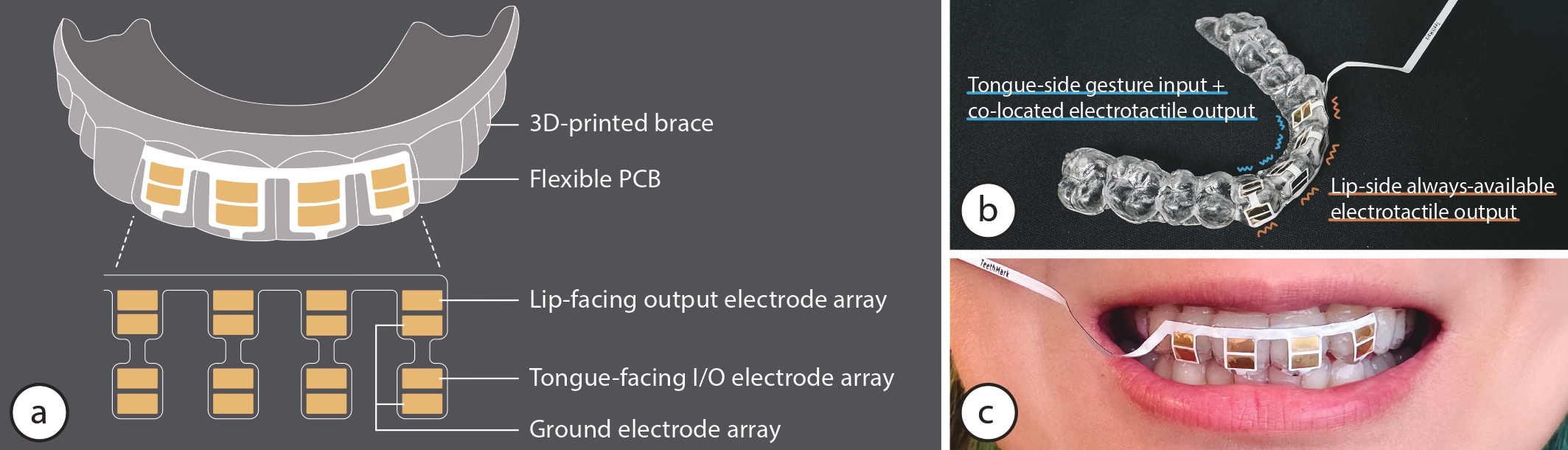
(a) TeethMark schematic: a customized 3D-printed brace with an attached flexible PCB, which includes four electrode arrays. (b) The fabricated TeethMark brace. (c) Wearing the TeethMark brace.
TeethMark
Intraoral Interaction
May 2025 - Sep 2025
Project Overview
TeethMark is an intraoral interface that enables tongue–tooth interaction by leveraging the tongue as the active medium for gesture input and electro-tactile feedback, while utilizing teeth as positional cues for localization. By applying a flexible PCB on a 3D-printed brace, TeethMark can recognize tapping, sliding, and area-touch gestures, and deliver two forms of electrotactile feedback: co-located feedback when the tongue touches the inner side of the teeth, and always-available feedback on the lip-facing side. With our design tool, users can customize and generate their own flexible PCB layouts, selecting interaction locations at the level of individual teeth. We demonstrate its versatility through a set of applications, including language education, VR sensory sharing, gamified myofunctional therapy, and fabrication tool support.
PDFDemonstration Video
30-second Preview Video
Interaction Space

TeethMark supports tapping, sliding, and area-touch on the inner tooth surfaces with co-located feedback, and provides always-available feedback on the outer surfaces for the lips.
Fabrication Process

(a) A plaster teeth model. (b) An SLA-printed TeethMark brace made from dental resin. (c) Using a squeeze bottle to apply the dental resin around FPCB, (d) and curing it with a UV flashlight.
PCB Schematic
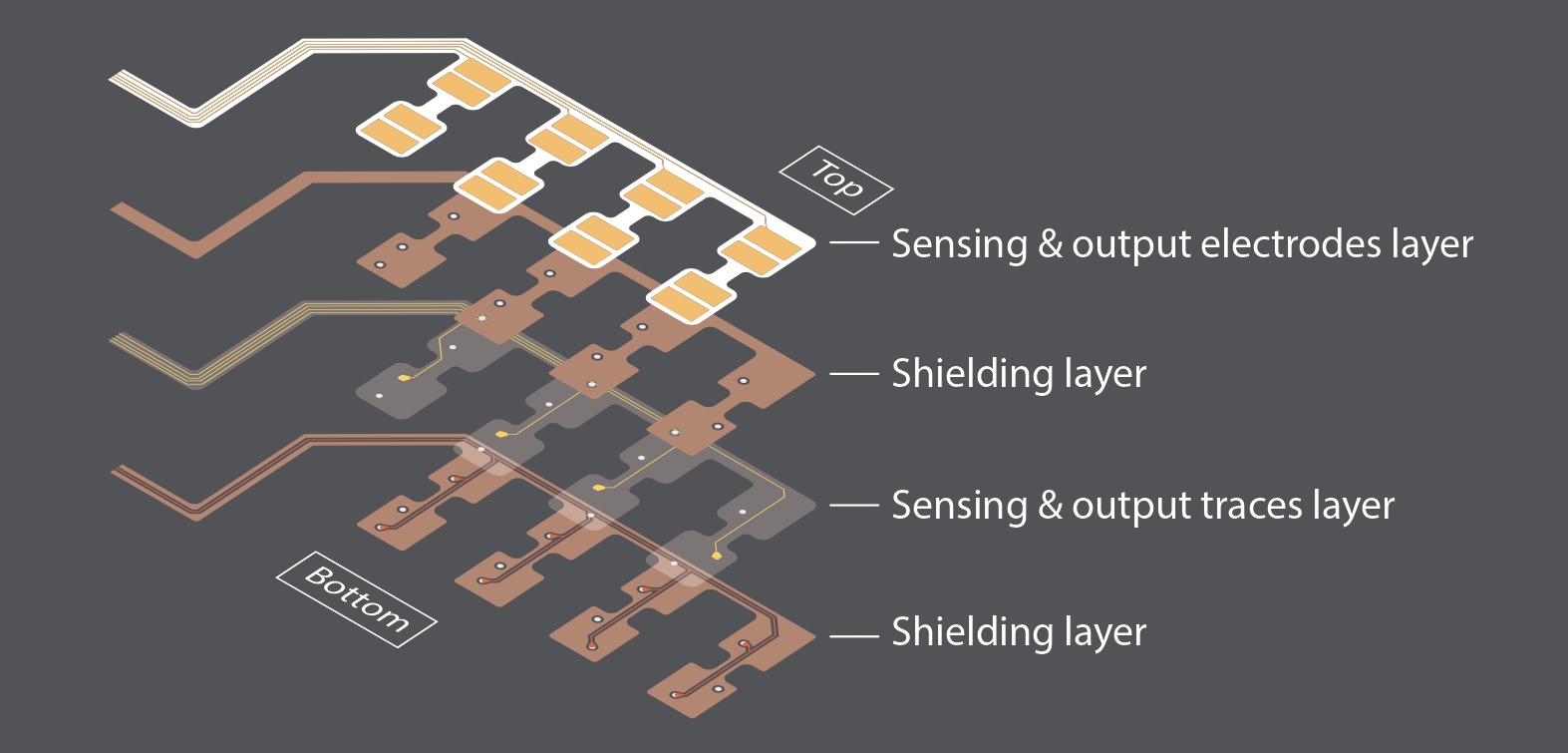
Schematic of the four-layer flexible PCB: the top layer contains electrodes contacting the lip and tongue; the second and fourth layers serve as grounded shielding for reliable sensing; the third layer routes traces to the tongue-facing electrodes.
The TeethMark Design Tool
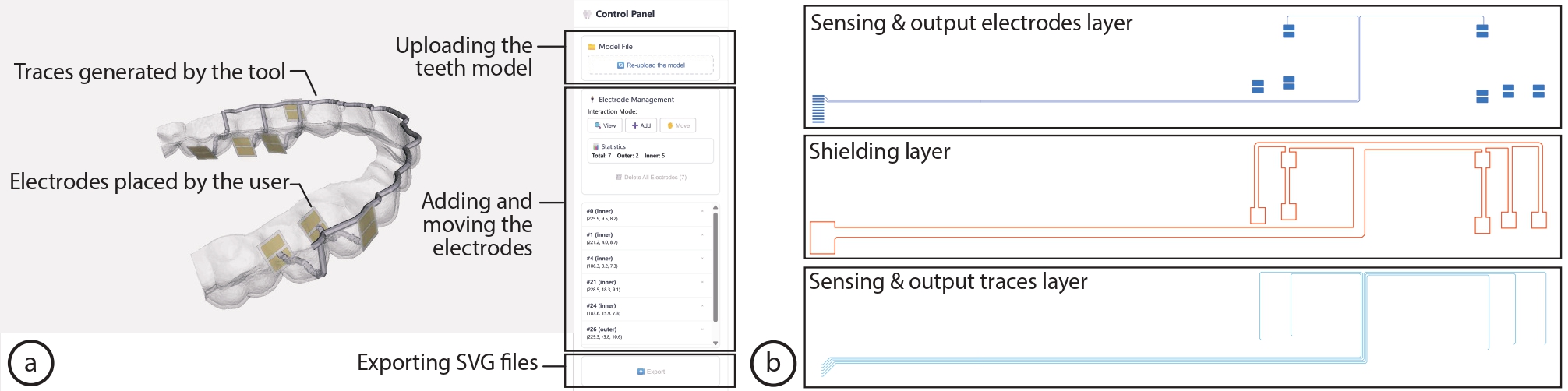
(a) The TeethMark design tool. Users upload their teeth model into the tool, adding and moving the electrodes on the desired teeth surface. (b) All required fabrication layers (sensing, output, shielding) are exported as SVG files.
Application-Supporting Language Education
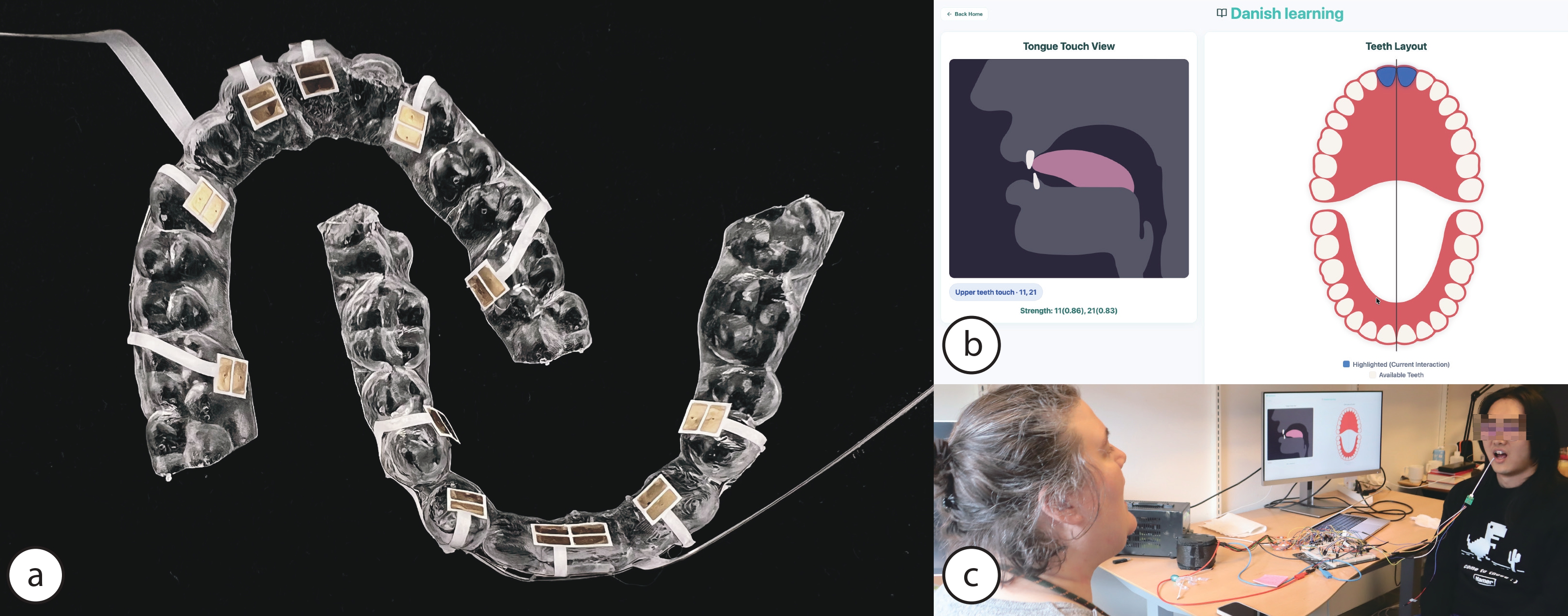
(a) TeethMark braces designed for language education for the upper and lower teeth. (b) A real-time interface that visualizes tongue–tooth contact and tongue position in a side view. (c) A demonstration session featuring a language teacher instructing with the TeethMark brace.
Application-VR Interaction
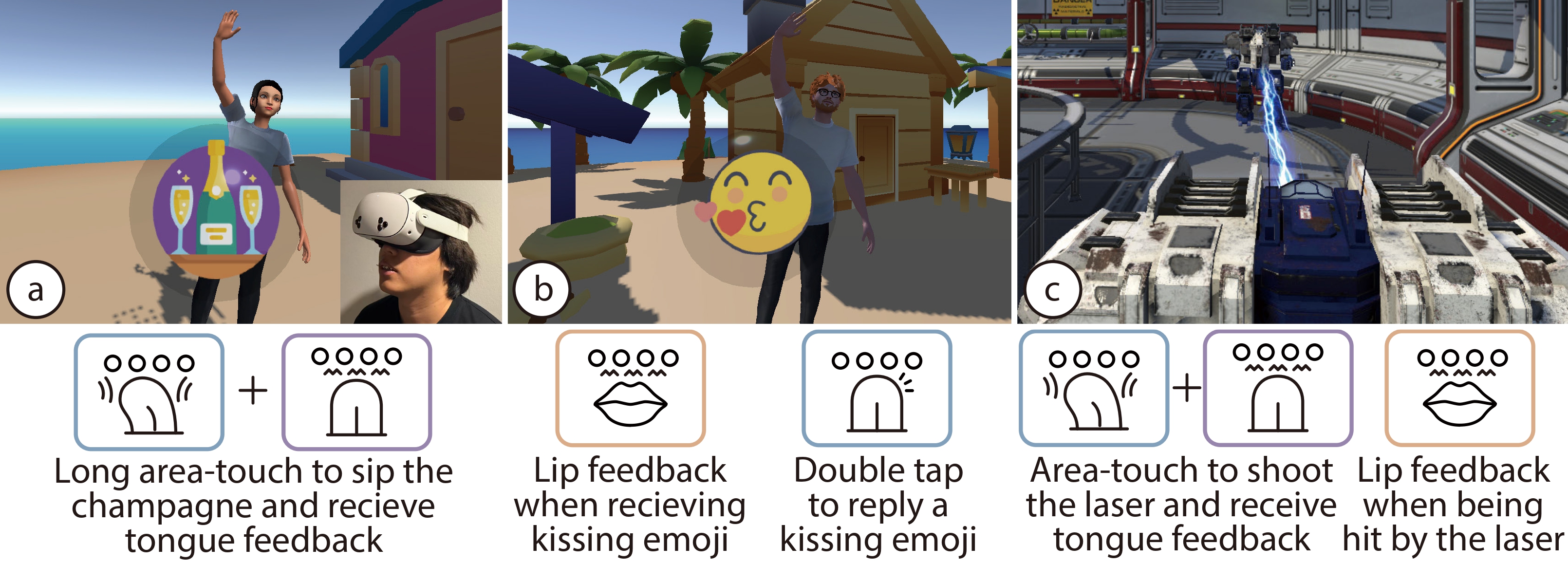
(a) TeethMark in VR social interaction. Long area-touch triggers drinking action with bubble-like tactile feedback. (b) A "kissing" emoji delivers lip feedback; users reply with a double tap. (c) Gamified myofunctional therapy. Area-touch fires lasers with continuous feedback; hits are signaled on the lips.

